
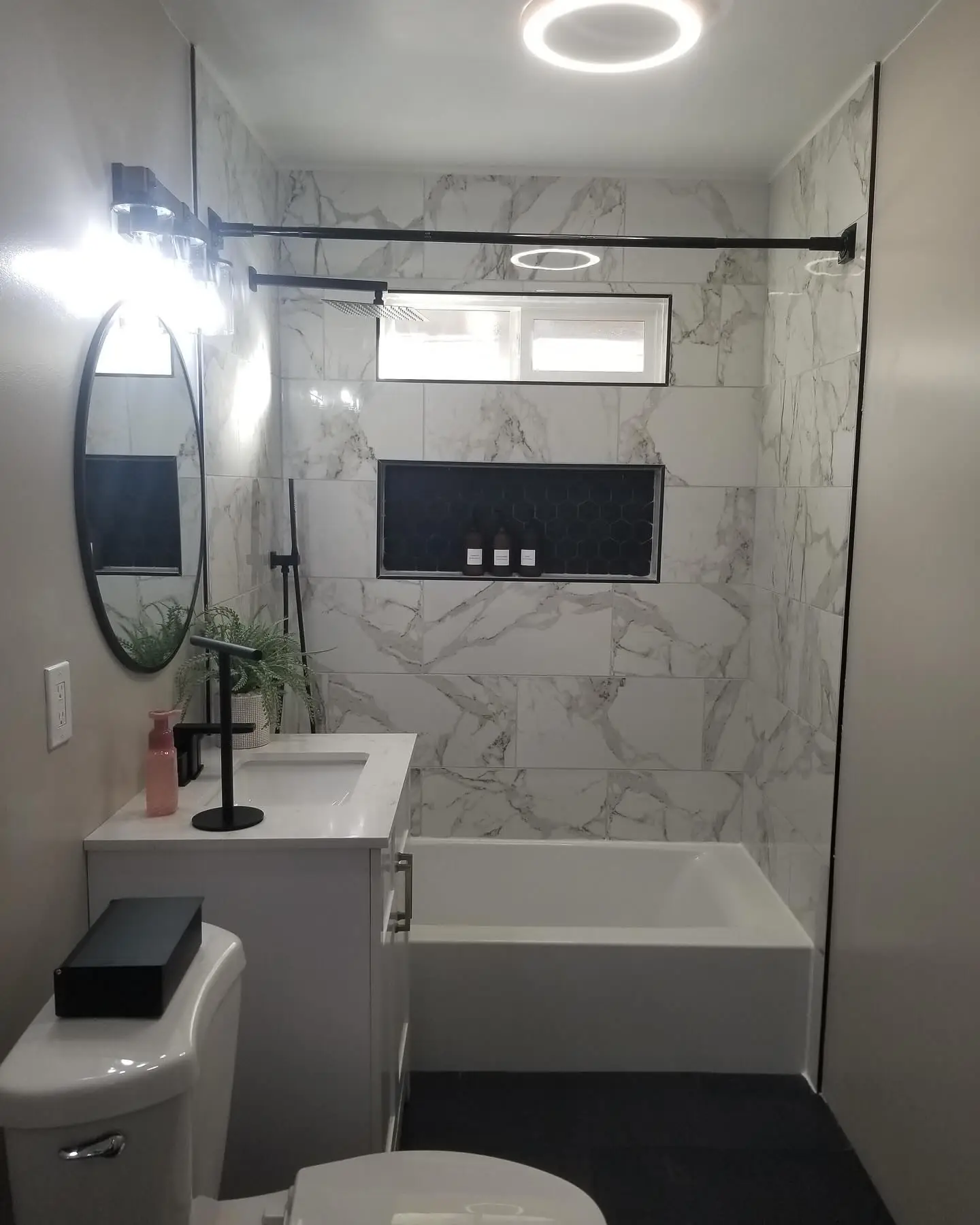
- These are general planning ranges, not quotes — the only accurate figure is an on-site estimate.
- Cost is driven by scope, material tier, and whether plumbing or electrical moves.
- Colorado clay soil and freeze-thaw add base-prep cost to outdoor and concrete work.
- Budget a 10–15% contingency for what's found once walls or slabs open up.
Master cost table (2026)
Here are the ranges we use for planning conversations across Parker and south Denver. Every figure below is a general planning range, not a quote or guarantee — your actual cost depends on size, materials, site conditions, and scope. Use these to sanity-check a budget, then get an on-site estimate for a real number.
| Project | General range | Notes |
|---|---|---|
| Bathroom — refresh | $5,000–$12,000 | Same layout: flooring, vanity, fixtures, paint |
| Bathroom — full mid-range | $12,000–$25,000 | New shower/tub, tile, waterproofing, fixtures |
| Bathroom — high-end | $25,000+ | Layout changes, moved plumbing, custom tile |
| Kitchen update (non-gut) | $8,000–$25,000 | Finishes, fixtures, some cabinetry — layout stays |
| Full kitchen remodel | $25,000–$60,000+ | Cabinets, counters, layout, appliances |
| Basement finishing | $25,000–$60,000 | Roughly $30–$55 per finished sq ft |
| Interior room remodel | $8,000–$30,000 | Depends on scope and finish level |
| LVP flooring | $4–$9 / sq ft installed | Material and subfloor prep dependent |
| Custom built-ins / fireplace wall | $4,000–$15,000+ | Size, materials, and detail level |
| Standard concrete | $8–$15 / sq ft | Base prep, thickness, and finish |
| Stamped concrete | $12–$25 / sq ft | Pattern, color, and sealing |
| Concrete patio | $8,000–$25,000 | Depends on size and finish |
| Fence | $25–$60 / linear ft | Material dependent |
| Artificial turf | $8–$18 / sq ft installed | Base prep and edging affect cost |
Each of these has a deeper guide — for example our bathroom remodel guide and basement finishing guide break the numbers down further.
What actually drives cost
Two projects with the same square footage can land thousands apart. Here's what moves the number.
Scope and size
The clearer and larger the scope, the higher the cost — but a well-defined scope is also what keeps a project from drifting. Vague plans lead to change orders, which are the most expensive way to build.
Material tier
Finishes span a wide price band. The jump from builder-grade to mid-range to high-end tile, cabinetry, counters, or fixtures often moves a budget more than the labor does. Choosing where to splurge and where to save is one of the most useful conversations to have early.
Moving plumbing or electrical
Keeping fixtures where they are is far cheaper than relocating them. Moving a drain, running new circuits, or relocating a panel adds labor, materials, and often permit scope. If budget is tight, leaving mechanicals in place is the single biggest lever you have.
Site conditions
What's hidden behind the walls or under the slab matters. Older wiring, prior water damage, an out-of-level floor, or a failing base under a patio all add cost once discovered. This is exactly what a contingency is for.

Colorado-specific cost factors
Front Range conditions add real line items that national averages miss, especially outdoors.
Clay soil and base prep
Expansive clay soils are common along the Front Range, so concrete, patios, and footings need proper base prep and compaction to sit right. Footings are typically set below the local frost line — often around 30–36 inches, but confirm locally. Skimping on base prep is how a beautiful new slab cracks or heaves within a couple of winters.
Freeze-thaw cycles
We get frequent freeze-thaw swings, so exterior concrete needs an air-entrained mix, control joints, and sealing to hold up. That's built into the concrete ranges above — and it's why the cheapest pour is rarely the least expensive over ten years.
Radon and basements
Douglas County is a high-radon area (EPA Zone 1), so finishing a basement is the right time to budget for radon testing and, if needed, mitigation. It's a modest line item relative to the project.
HOA and altitude
Many neighborhoods have HOA architectural review, so exterior projects can carry a short approval step — worth planning for. And intense high-altitude UV ages exterior finishes, caulk, and paint faster, which is worth factoring into material choices.
How to budget and set a contingency
A good remodel budget has three parts: the project estimate, a contingency, and a little breathing room for the finishes you'll fall in love with mid-project. For the contingency, set aside about 10–15% of the budget for surprises found once work opens up — the higher end for older homes or anything that opens walls or slabs.
On financing: many homeowners phase larger projects or use home-improvement financing to spread the cost, and that's a personal decision best made with your lender or financial advisor — we don't offer financing or financial advice, but we're happy to scope a project in phases so it fits your budget and timeline.
Why online calculators mislead
Online remodel calculators are built on broad national averages, and they can't see your house. They miss the things that actually set the price: your exact layout, the materials you pick, whether plumbing moves, and local conditions like clay soil or freeze-thaw. They're fine as a rough gut-check, but they routinely come in high or low for a specific home. Treat them as a starting range, never a quote.
How to get an accurate estimate
The fastest path to a real number is a short conversation plus a few photos. Send a wide shot of each space, close-ups of anything you want changed or that's damaged, photos of plumbing and electrical locations, and a couple of examples of finishes you like. With that, we can talk through realistic scope and budget on the first call. When you're ready, our permit guide covers approvals, and our home remodeling service outlines how we run a project from scope to finish.
Want a real number for your project?
Mountain Ridge Renovations LLC gives Parker and south Denver homeowners clear scope and honest estimates — remodels, basements, flooring, concrete, fences, and more. No pressure, no guesswork.
Schedule a Free EstimateHome remodel cost FAQs
How much does a home remodel cost in Parker, CO?
It depends entirely on the project. As general 2026 planning ranges, a bathroom remodel runs about $5,000 to $25,000-plus, a kitchen $8,000 to $60,000-plus, and a finished basement about $25,000 to $60,000. Outdoor work like a concrete patio runs about $8,000 to $25,000. Scope, materials, and site conditions drive the number, so an on-site estimate is the only accurate figure.
What drives the cost of a remodel the most?
The biggest drivers are scope and size, material tier, and whether the project moves plumbing or electrical. Site conditions matter too — along the Front Range, expansive clay soil, base prep, and freeze-thaw cycles affect exterior work like concrete and patios. Structural changes and moving mechanicals add the most cost fastest.
How much should I budget for a contingency?
Set aside a contingency of about 10 to 15 percent of the project budget for surprises found once work opens up — older wiring, hidden water damage, or subfloor issues. Older homes and projects that open walls or slabs warrant the higher end of that range. A contingency keeps a surprise from stalling the job.
Why do online remodel cost calculators feel off?
Online calculators use broad national averages and can't see your home, so they miss the details that actually set price — your layout, material choices, whether plumbing moves, and local site conditions like clay soil or freeze-thaw. They are fine for a rough gut-check but should never replace an on-site estimate.